Types of Engineered Wood: Advantages and Disadvantages
LVL beam is made from wood veneers compressed with resins and glues, creating a high-density engineered wood product used in framing. It is strong but has only one strength axis because the veneers are stacked with the grain running in the same direction.
aluminium composite panels are made from the same hardwoods and softwoods used in lumber production, combined with additives such as adhesives. Often, waste wood from sawmills is utilized, and the wood is treated through chemical or heat processes to meet specific size requirements that are difficult to achieve naturally.
Â
Engineered wood is used in various applications, including home construction, commercial buildings, and industrial products.
Â
Â
7 Popular Types of Engineered Wood
Â
Engineered wood products are available as framing members—beams, for example—and sheet goods, which can be used as sheathing or flooring.
Â
1. Laminated Veneer Lumber (LVL) Â
Â
LVL beam is made from wood veneers compressed with resins and glues, creating a high-density engineered wood product used in framing. It is strong but has only one strength axis because the veneers are stacked with the grain running in the same direction. As a result, LVL can only handle loads in one direction.
Â
2. Laminated Strand Lumber (LSL) Â
Â
LSL is made from small wood strips, or strands, arranged in a dense, angled pattern. It is a higher density and stronger engineered wood product than LVL, consisting of about 95% wood fiber and 5% resin. The angled arrangement makes LSL highly resistant to weight and torsion. However, LSL is expensive, costing about three times more than dimensional lumber.
Â
3. Oriented Strand Board (OSB) Â
Â
OSB is created by combining wood strands or flakes with adhesives and compressing them into mats. It is suitable for load-bearing applications like flooring and roof decking. OSB quality varies—some are sanded and moisture-resistant, while others are not. For moisture exposure, premium-grade OSB is recommended. When installing OSB (or plywood), leave gaps at the ends to accommodate expansion and contraction from moisture. Premium subflooring has a pre-manufactured stop that provides an ⅛-inch gap between boards.
Â
4. Plywood Â
Â
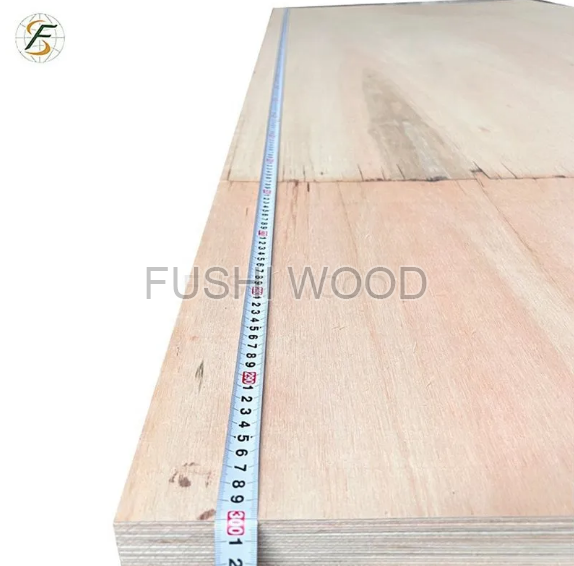
Plywood is made from thin layers (or "plies") of wood veneer that are glued together. It offers several benefits to builders, as its "cross graining" property provides dimensional stability and consistent strength in all directions. Â
Â
Remember to leave gaps at the ends when installing plywood, as it still expands and contracts with moisture. Â
Â
Plywood sheets typically have two face veneers. A sheet graded "AB" means one side is A-quality (smooth surface, free of knots) and the other side is B-quality (mostly free of knots, with some tight ones under 1 inch). Â
Â
- A: Highest quality with a smooth, knot-free surface. Â
- B: Largely free of knots, though tight ones (under 1 inch) are allowed. Â
- C: May have knots up to 1.5 inches and knotholes under 1 inch. Â
- D: The lowest grade, which may have knots and knotholes up to 2.5 inches, and defects are not repaired. Â
- X: Indicates exterior plywood. For example, CDX means C grade on one side, D grade on the other, and designed for outdoor use.
Â
5. Medium Density Fiberboard (MDF) Â
Â
MDF is made by breaking down hardwood and softwood into fibers, which are then combined with wax and resin binders and formed into panels using high heat and pressure. It is denser than plywood and oriented strand board, though like OSB, there are grades that can withstand water and weather and others that cannot.
Â
6. Composite Board Â
Â
Composite board refers to engineered wood products like MDF and oriented strand board, made by combining plastic content and wood fiber through extrusion and heating. It is cost-effective, easy to install, and can be made from recycled materials, making it suitable for sustainable design.
Â
7. Cross-Laminated Timber (CLT) Â
Â
CLT is made by gluing together layers of solid sawn lumber, with each layer oriented perpendicular to the next. This process strengthens the material and allows for flexible panel thickness. CLT provides good insulation due to its multi-layer wood composition.
Â
Pros and Cons of Engineered Wood Â
Â
Advantages of Engineered Wood over Solid Wood Â
Â
Engineered wood is sustainable, achieving or exceeding the density and strength of old-growth timber using young trees. It reduces waste by utilizing all parts of the tree, including defects and leftover pieces. Engineered wood can be stronger than dimensional lumber due to its high density and layered grain structure. Engineered beams come in larger sizes because they are made from composites rather than being cut from single trees. Some engineered wood products resist warping and splitting more effectively than dimensional lumber.
Â
Disadvantages of Engineered Wood over Solid Wood Â
Â
Engineered wood can be less aesthetically pleasing than solid wood, due to visible wood strips, unlike the clean, natural look of solid timbers. One exception is architectural-grade glulam. Additionally, engineered wood, especially LSL, can be more expensive than dimensional lumber.

If you would like more information about this product, please feel free to contact us. Recommend other popular products for you: commercial plywood types, Laminated Beams Supplier, Scaffold Planks Supplier, wooden scaffold planks, osha scaffold plank, how is lvl made, Engineered timber I joists, Engineered floor joist cost, how much are lvl beams, osha approved scaffold planks, cdx plywood thickness, osha boards, osha plank, exterior door veneer skins, hardboard sheets for flooring, lvl floor joist, plywood flexible, scaffold boards osha, cdx pine plywood, flex board plywood